
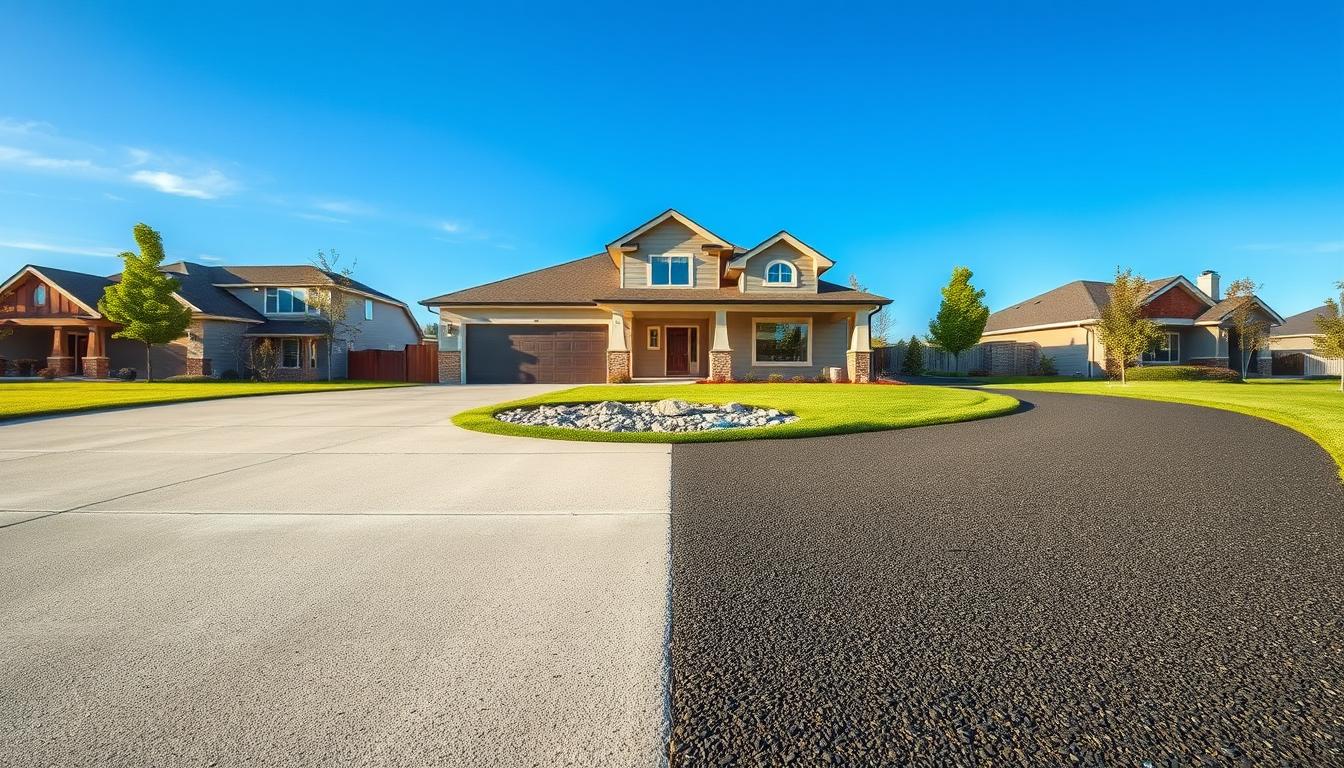
Choosing the right surface for your property is a big decision. For people living around Denver, this choice is especially important when choosing the right material for your driveway. The local climate brings unique challenges that affect how well your installation holds up over time.
This guide will help you understand the key differences between selecting concrete vs asphalt for your driveway. We will focus on what matters such as factors like upfront cost, long-term maintenance, and durability in Denver’s weather.
There is no single perfect answer for every home. The best material for you depends on your budget, your property’s specific needs, and your personal style. Our goal is to give you the information you need to make a confident choice!
Key Takeaways
- Denver’s specific climate plays a major role in driveway performance and longevity.
- Initial installation costs and long-term maintenance are critical factors to compare.
- The right choice balances your budget with your desired aesthetic and durability.
- Each paving option has distinct advantages and disadvantages for local conditions.
- Your final decision should reflect your personal priorities for your home’s exterior.
Understanding Concrete vs. Asphalt Driveways
Before comparing performance and costs, it’s essential to grasp the basic composition of these popular paving options. The fundamental difference lies in what holds the materials together.
Overview of Asphalt Driveways
This material gets its distinctive black appearance from bitumen, a petroleum-based binder. Workers heat the sticky mixture with aggregates like sand and crushed stone to make it pliable.
The installation process involves pouring the warm mix onto a prepared base. Crews then spread it evenly and compact it with heavy rollers. This creates a solid surface that’s ready for use almost immediately.
Overview of Concrete Driveways
Instead of petroleum products, this option uses cement and water as its binding agent. The mixture combines with similar aggregates to create a versatile construction material.
Installation requires careful preparation with formwork and steel reinforcement. After pouring, professionals finish the surface with techniques like stamping or staining. This allows for various aesthetic customization options.
The binder type fundamentally distinguishes these two materials. This difference influences everything from appearance to long-term performance in different conditions.
Material Comparisons: Durability and Maintenance
When evaluating paving materials, durability and upkeep requirements become critical factors for homeowners. The long-term performance of your installation depends heavily on how well it withstands daily use and environmental challenges.
Both options have distinct strengths in different conditions. Understanding these differences helps you anticipate future needs and costs.
Longevity and Weather Performance
Properly maintained installations can serve you for decades. One material typically lasts 30-50 years with appropriate care, while the other averages 15-30 years of service.
Weather resistance varies significantly between the two. The petroleum-based option handles freeze-thaw cycles better in cold climates. However, it can soften during extreme heat. The cement-based alternative withstands high temperatures well but may develop surface issues in freezing conditions.
Repair and Maintenance Needs
Regular maintenance extends the lifespan of any surface. The darker material requires protective coatings every 3-5 years. The lighter option needs less frequent attention, with sealants being optional every 5-10 years.
When repair becomes necessary, costs and complexity differ. Fixing minor cracks or potholes in one material is straightforward and affordable. Addressing damage in the other option often involves higher costs and color-matching challenges.
Cost Analysis: Installation and Long-Term Expenses
Understanding the financial implications of your driveway choice requires looking beyond just the initial price tag. The true investment involves both installation fees and future upkeep costs that accumulate over time.
Installation Costs per Square Foot
The petroleum-based option typically runs $7 to $15 per square foot for complete installation. Materials account for $3-$6 of this cost, with labor adding $5-$7 per square foot.
In comparison, the cement-based material ranges from $8 to $20 per square foot. Labor costs vary more widely here, from $2 to $10 per square foot depending on complexity.
For a standard two-car driveway covering 400-600 square feet, expect to pay $4,200-$9,000 for the first option versus $4,800-$12,000 for the second.
Ongoing Maintenance and Repair Investments
While the darker surface is less expensive initially, it demands more frequent attention. Sealcoating every few years costs several hundred dollars each time.
The lighter alternative requires minimal upkeep, with sealants being optional every 5-10 years. This lower maintenance need can offset the higher installation cost over decades of use.
Your final decision should balance immediate budget constraints with long-term financial planning for your property.
Climate Considerations for Denver Homeowners
Living in Denver means experiencing both freezing winters and hot summers that test your installation. The city’s unique position creates temperature extremes that demand careful material selection.
Performance in Denver’s Seasonal Extremes
Winter brings harsh freeze-thaw cycles that challenge paving materials. The flexible nature of one option makes it resistant to cracking during these temperature swings.
Meanwhile, the other material can develop surface issues in extreme cold. Modern installation techniques using special additives significantly reduce this risk for local properties.
Summer presents different challenges with Denver’s intense high-altitude sun. The dark surface can become soft and tacky during heat waves, potentially leaving marks.
The lighter alternative stays solid and cool even during the hottest days. This temperature difference matters for families who use their outdoor space regularly.
Denver’s semi-arid climate creates a middle ground where both options can work well. Your decision may come down to whether winter durability or summer comfort matters more for your lifestyle.
Aesthetic Appeal and Customization Options
Customization possibilities can transform a basic installation into a distinctive feature that reflects your personal style. The visual appearance of your property’s entrance makes a lasting impression on visitors and potential buyers.
Design Finishes and Customizations
The cement-based material offers extensive design options for homeowners. You can choose from stamped patterns that mimic natural stone, exposed aggregate textures, or acid staining for unique color effects.
Various finishes like salt, sponge, or machine trowel create different visual appeals. This versatility allows your outdoor surface to perfectly complement your home‘s architectural style.
The petroleum-based alternative has a more limited range of customization options. It starts with a sleek jet-black look that gradually develops a light gray patina over time.
Enhancing Curb Appeal
Well-executed decorative installations are considered more upscale and can enhance your property’s market value. The custom look of a properly maintained cement surface often commands higher resale prices.
A well-kept darker surface provides clean, professional appeal that many homeowners appreciate. Consider your neighborhood’s aesthetic standards when choosing between understated professionalism and customizable design potential.
The final appearance should balance your personal taste with practical considerations for your Denver home. Each material offers distinct advantages for creating the perfect entrance to your property.
Installation Process and Timeframes
Getting your new surface installed involves understanding two very different processes. The timeline from start to finish varies significantly between materials, affecting how long you’ll need to plan around the project.
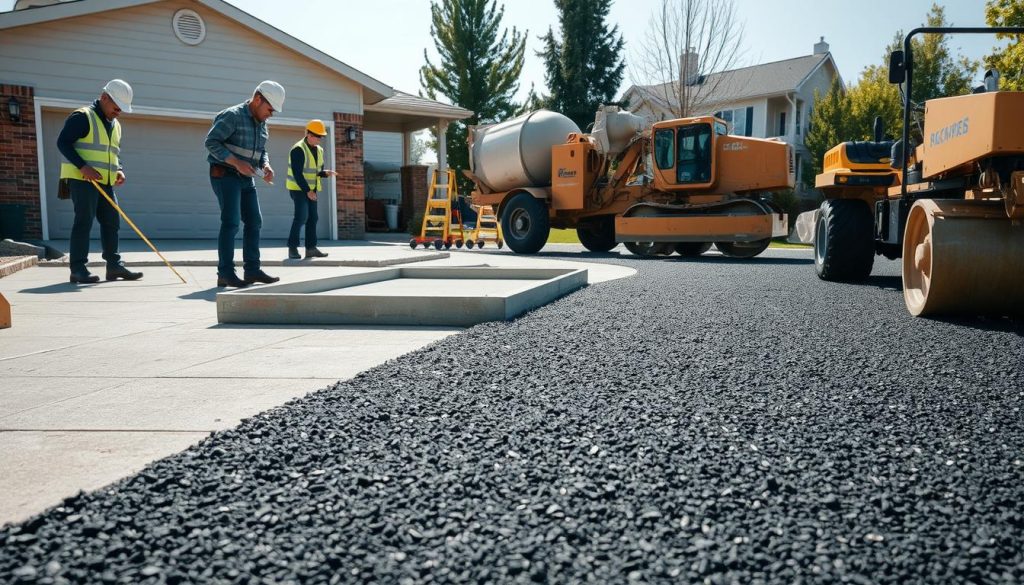
One material offers quicker access after installation. You can walk on it right away and drive within three days. The other requires a 48-hour wait before walking and a full week before vehicle use.
Professional vs. DIY Approaches
Both installation methods demand specialized equipment and expertise. The petroleum-based option needs heated mixing and heavy compaction machinery. The cement-based alternative requires precise formwork and finishing tools.
DIY installation is strongly discouraged for either material. Without professional training, you risk improper compaction and drainage issues. These mistakes lead to premature cracking and shortened lifespan.
Hiring a qualified contractor ensures proper execution. They bring the right equipment and knowledge for lasting results. Verify their licensing and insurance before committing to any driveway installation project.
Seasonal timing matters too. Schedule the darker material installation during warmer months. The lighter alternative offers more flexibility, avoiding only freezing conditions.
Your investment in professional installation pays off through decades of reliable service. Proper concrete driveway installation or asphalt work requires skills most homeowners don’t possess.
Pros and Cons of Asphalt and Concrete
Every paving material comes with its own set of advantages and limitations that homeowners should carefully consider. Understanding these trade-offs helps you make the right choice for your property.
The petroleum-based option offers several strong pros. It’s budget-friendly and installs quickly. You can use it within days. This material handles Denver’s cold winters well. Repairs are straightforward and affordable.
However, this choice has notable drawbacks. It requires regular sealcoating every few years. The surface can soften during hot summers. You’ll face a shorter lifespan of 15-30 years. Customization options are quite limited.
The cement-based alternative provides different benefits. It boasts exceptional durability with a 30-50 year lifespan. Maintenance needs are minimal. You can choose from various colors and finishes. This material withstands high temperatures beautifully.
The main disadvantages include higher upfront costs. Installation takes longer with extended curing time. Freeze-thaw cycles may cause surface issues. Repairs tend to be more expensive when needed.
Your final decision should match your priorities. Consider your budget, maintenance preferences, and how long you plan to stay in your home. Each material serves different home improvement goals effectively.
Environmental and Safety Impact
Environmental sustainability and safety factors play an increasingly important role in material selection. Both paving options have distinct ecological footprints and safety considerations that Denver homeowners should weigh carefully.
Recyclability and Carbon Footprint
The petroleum-based material boasts impressive recycling statistics. Over 87 million tons get reclaimed annually, with 90% repurposed into new installations. This reduces waste significantly.
However, its fossil fuel composition raises environmental concerns. Potential chemical leaching requires proper installation techniques to minimize risks.
The cement-based alternative faces different challenges. Production creates substantial CO2 emissions due to energy-intensive processes. Yet its exceptional longevity helps offset this initial carbon footprint.
Safety and Regulatory Considerations
Local regulations may restrict certain materials in your area. Some municipalities limit permeable surfaces due to stormwater management needs.
Make sure to check Denver zoning codes before deciding. Homeowner associations often have specific requirements about driveway type and appearance.
Practical safety factors matter too. Dark surfaces absorb heat, potentially burning bare feet. Traction in icy conditions and nighttime visibility also affect your property‘s safety.
Concrete vs. Asphalt Driveways: Making the Right Choice for Your Home
Your final selection for your property’s entrance should reflect both practical needs and personal taste. There’s no single perfect answer that works for every situation. The best option depends entirely on your specific circumstances and priorities.
If you’re working with a limited budget and don’t mind periodic upkeep, one material offers significant savings upfront. This choice handles Denver’s winter conditions well and features simpler repair processes. It provides solid performance for homeowners focused on immediate cost concerns.
For those prioritizing long-term value and visual appeal, the alternative material makes more sense despite higher initial investment. Its exceptional durability and minimal maintenance needs pay off over decades. The customization options let you create a unique look that enhances your home’s character.
Consider how long you plan to stay in your residence and what matters most for your lifestyle. Each paving type serves different purposes effectively. Your decision should balance budget constraints with your vision for your property’s appearance and functionality.
Both options can work well in Denver’s climate when properly installed. The right choice ultimately comes down to your personal preferences and home improvement goals. Trust your instincts about what will serve your family best for years to come.
Conclusion
The journey to selecting the perfect paving material for your Denver home reveals that both options have compelling merits. Your choice ultimately depends on your personal priorities and circumstances.
Cost considerations show that an asphalt driveway is less expensive upfront, saving you $1,000-$2,000 on average installations. However, a concrete driveway delivers better long-term value despite the higher initial investment.
Maintenance needs differ significantly. The darker surface requires sealcoating within the first year and then every three to five years. The cement-based alternative needs minimal attention with optional sealing every five years.
Durability is another key factor. A properly installed concrete driveway can last years—typically 30-50 years with proper care. An asphalt driveway averages 15-30 years of service.
For Denver homeowners, consider your property’s sun exposure and whether winter freeze-thaw cycles or summer heat softening concern you more. Each material handles these conditions differently.
Make sure you choose a licensed contractor experienced with your selected material. Verify references and understand what’s included in your quote before committing.
You now have the knowledge to confidently choose between these two excellent options for your property. Consider your budget, aesthetic preferences, and long-term plans to make the right decision for your home.