
Living in Colorado means enjoying beautiful scenery. It also means dealing with a demanding climate. Your outdoor surfaces face a real battle against the elements.
One day can be sunny and warm. The next can bring a sudden snowstorm. These rapid shifts put immense stress on materials.
At high altitudes, the sun’s rays are incredibly strong. This intense exposure can break down and fade surfaces quickly. Winter brings its own challenges with repeated freezing and thawing cycles.
This expansion and contraction is a primary cause of cracks and deterioration. Without the right care, minor issues can become major, costly problems. Protecting your investment is crucial for long-term enjoyment and safety.
The good news is that effective care doesn’t have to be complex or expensive. With proactive strategies, you can shield your outdoor space from damage. This guide provides the expert knowledge you need to take action today.
Key Takeaways
- Colorado’s unique environment, with its big temperature swings and strong sun, is tough on outdoor surfaces.
- Freeze-thaw cycles during winter are a major cause of cracking and structural damage.
- High-altitude UV exposure can degrade and weaken materials over time.
- Proper care is essential for safety, longevity, and protecting your property’s value.
- Proactive, simple maintenance strategies can prevent small issues from becoming expensive repairs.
- The advice in this guide is specifically tailored to withstand local weather challenges.
- Starting a consistent care routine now can save you money and hassle in the future.
Understanding the Colorado Climate and Its Impact on Concrete Patios
Property owners in the Centennial State face environmental factors that test the durability of their hardscape investments. The region’s distinctive combination of high elevation, intense sunlight, and dramatic temperature fluctuations creates a perfect storm of stressors.
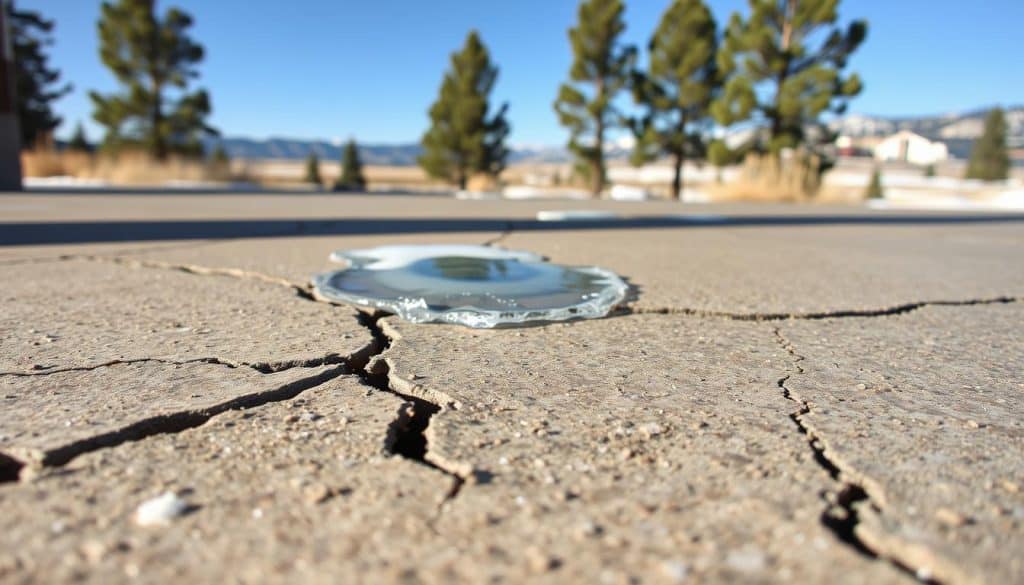
These conditions work together to accelerate deterioration through scientifically understood mechanisms. Recognizing how each element contributes to surface degradation is essential for effective protection strategies.
Freeze-Thaw Cycles and Their Effects on Concrete
The freeze-thaw process represents the most destructive force affecting outdoor surfaces in this region. Moisture penetrates microscopic cracks in the material during warmer periods.
When temperatures drop below freezing, this water expands by approximately 9%. The resulting internal pressure causes existing fissures to widen dramatically. Repeated cycles throughout cold months lead to significant structural compromise.
Colorado experiences an exceptionally high number of these cycles compared to other states. Spring and fall transition periods create ideal conditions for accelerated damage as temperatures frequently oscillate around the freezing point.
UV Exposure and Unique Colorado Weather Challenges
High-altitude geography intensifies solar radiation significantly. Denver receives approximately 300 days of sunshine annually, creating relentless UV exposure.
This constant bombardment weakens the cement matrix that binds aggregate materials together. Surface degradation manifests as fading, powdering, and reduced structural integrity over time.
Rapid weather changes add another layer of stress. Temperature swings of 40 degrees within 24 hours are not uncommon. This expansion and contraction tests material resilience constantly.
Understanding these climate-specific challenges enables property owners to recognize early warning signs. Surface scaling, hairline cracks, and discoloration indicate when proactive intervention becomes necessary.
Concrete Patio Maintenance Tips for Colorado Weather
The transition from fall to winter is the critical window for applying protective measures that prevent costly damage. A strategic routine focused on sealing, snow management, and physical barriers forms a powerful defense.
This approach directly counters the state’s unique environmental stressors.
Sealant Application and Small Crack Repair
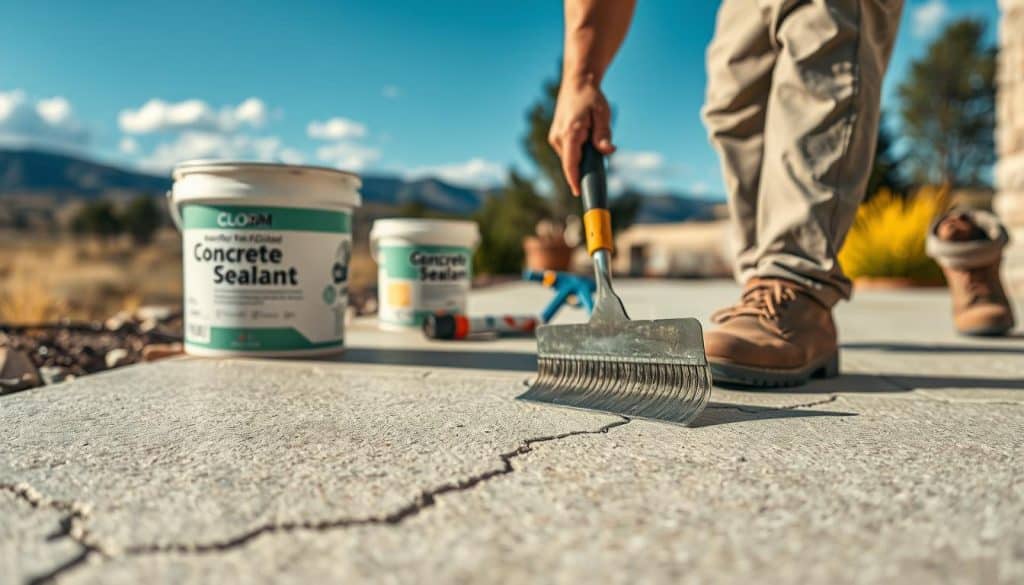
Applying a high-quality, freeze-thaw-resistant sealant in early fall creates an impermeable barrier. This step is foundational. It stops water penetration, which is the primary cause of damage during winter.
Before application, scrub the surface thoroughly to remove all dirt, oil, and debris. Proper adhesion is non-negotiable for effectiveness. Address any small cracks immediately.
Clean them with a wire brush and patch with a rapid-setting, cold-weather mix. These repairs cure quickly, readying your space before the first snowfall.
Snow Removal Strategies and Eco-Friendly Deicers
Your snow removal habits directly impact longevity. Always use a plastic shovel to avoid scratching the surface. Remove snow promptly after storms to prevent compaction into ice.
Pay special attention to shaded areas where ice persists. For melting, choose eco-friendly deicers like magnesium chloride. They melt effectively without the corrosive damage of traditional rock salt.
This protects both your hardscape and the surrounding environment.
Using Insulating Blankets and Protective Covers
During extreme cold snaps, insulating blankets are invaluable. They trap heat, protecting recently repaired areas and preventing thermal shock. Secure them well against wind.
Additionally, use high-quality waterproof covers for furniture and other items. This prevents concentrated stress points, moisture trapping, and permanent stains on your outdoor flooring.
These simple steps protect concrete surfaces and extend their lifespan for decades.
Essential Concrete Repair and Protection Techniques
For surfaces that have endured years of environmental stress, comprehensive repair strategies restore both function and appearance. When basic maintenance no longer suffices, advanced methods address underlying structural issues.
Professional intervention becomes necessary when deterioration compromises the material’s fundamental integrity. These techniques go beyond superficial fixes to provide lasting solutions.
Patching, Resurfacing, and Topcoat Applications
Resurfacing creates a new protective layer that bonds securely to the existing substrate. This process eliminates surface damage and fills minor cracks effectively.
Meticulous preparation ensures proper adhesion between old and new materials. Choosing products formulated for extreme temperature cycling prevents future separation issues.
Strategic timing during mild weather allows optimal curing conditions. This approach maximizes the repair‘s strength and longevity.
Long-Term Strategies for Preventing Moisture and Stain Damage
High-quality sealants create impermeable barriers against water intrusion and UV degradation. Regular resealing every few years maintains this crucial protection.
Immediate spill cleanup prevents permanent stains from setting into the porous surface. Combined with proper sealing, this dual approach preserves aesthetic appeal.
Control joints allow natural expansion and contraction without random cracking. This strategic design element protects both structural integrity and visual quality for decades.
Innovative Design & Installation Considerations for Durability
Proactive design considerations implemented during construction can prevent 80% of common maintenance issues homeowners face. The right choices from the beginning ensure your outdoor investment withstands the test of time.
Customizable Design Options for Patios in Colorado
Stamped patterns offer realistic textures mimicking natural stone or wood at a fraction of the cost. These decorative surfaces maintain superior weather resistance while achieving your desired aesthetic.
Color selection dramatically impacts both appearance and longevity. Integral colors mixed throughout the material provide permanent, fade-resistant hues. Surface-applied options create rich tones but require more frequent sealing.
Proper Drainage, Reinforcement, and Control Joints
Proper drainage is absolutely critical for outdoor spaces. Implementing appropriate slope and drainage channels prevents water pooling that leads to freeze-thaw damage.
Structural reinforcement through fiber mesh or steel rebar significantly increases crack resistance. This distributes stress throughout the slab rather than concentrating it at weak points.
Control joint placement requires careful planning based on dimensions. These predetermined weak points direct cracking along planned lines rather than randomly across the surface.
Integrating Practical Outdoor Accessories and Windbreaks
Weather-resistant lighting fixtures blend practicality with elegance. They withstand rugged conditions while creating inviting atmosphere for evening enjoyment.
Windbreak structures protect against strong gusts, enhancing comfort and reducing stress on furniture. Designated storage areas for outdoor items provide protection from damaging elements.
Professional installation by contractors experienced with local conditions ensures your space lasts decades with minimal maintenance requirements.
Conclusion
Implementing the right protective measures transforms your outdoor investment from a seasonal liability into a year-round asset. The comprehensive strategies outlined provide a clear path to preserving your hardscape’s integrity against harsh conditions.
Addressing small cracks promptly and applying professional sealing before each winter are crucial steps. Proper snow and ice removal techniques prevent surface damage during freezing months. These proactive approaches protect concrete surfaces for many years.
Companies like Colorado Concrete Solutions and Veteran Patios offer expert solutions tailored to local challenges. Their experience ensures your concrete patio or driveway withstands repeated winters. Taking action today with professional consultation can prevent costly repairs tomorrow.
The investment in proper maintenance pays dividends through enhanced safety, property value, and uninterrupted outdoor enjoyment. Your beautiful outdoor patios will remain functional assets rather than deteriorating liabilities.